
Ownership
- Who is listed on the deed?
- Is the recorded owner living or deceased?
- Who may have inherited an interest?
- Was probate opened or completed?
- What interest can currently be transferred?
- Who has legal authority to sign?
DIFFICULT PROPERTY SITUATIONS
A property can have value and still be difficult or impossible to sell through an ordinary transaction.
VALUE CAN EXIST INSIDE A COMPLICATED SITUATION
A property can have real value and still be difficult or impossible to sell through an ordinary transaction.
The problem may involve ownership, probate, title, taxes, liens, occupants, access, condition, or several issues at the same time.
LandHat evaluates properties and ownership interests before every problem has been resolved.
A PRACTICAL FRAMEWORK
Most complicated property situations involve four basic questions.
The answers help determine what options are practical.
The answers help determine what options are practical.
OWNERSHIP AND PEOPLE
A property may remain titled in a deceased person’s name for many years.
Family members may understand who was supposed to receive the property, but that understanding is not always reflected in the deed or probate record.
Common situations include no probate, unfinished probate, an estate closed without addressing the property, multiple deceased owners, several generations of heirs, no authority to sign, or missing records.
Time alone does not complete an estate or transfer legal title.
LandHat may be able to review the ownership history and determine if the entire property or an individual interest can be purchased.
A property may be divided among several relatives or other owners who live in different states, have never met, disagree, refuse to contribute, cannot be located, ignore notices, want different amounts, or want to sell only their own share.
A missing owner, an unknown heir, and a known owner who refuses to respond are different problems.
One person’s lack of cooperation may stop a voluntary sale of the entire property. It does not always prevent another owner from selling an individual interest.
LandHat does not acquire someone else’s ownership merely because that person cannot be found or will not respond. It may, however, be able to purchase the documented interests of owners who are ready to sell.
An owner may hold only a percentage of the property rather than the entire property.
A partial interest may involve limited control, other owners, shared expenses, occupants, unfinished probate, title defects, future negotiation or legal work, and an uncertain path to selling the whole property.
A partial interest can have value, but it is a different asset from the entire property.
LandHat may consider buying an individual share even when the other owners are not ready to sell.
TITLE AND MONEY
A title company may stop a closing when the records do not clearly establish ownership or reveal an unresolved claim.
Common title problems include a deceased owner on the deed, a missing probate transfer, deed errors, missing signatures, unreleased mortgages, judgment liens, incorrect legal descriptions, conflicting transfers, former spouses, and tax-sale or sheriff-sale history.
When a title company will not close, useful information includes the written title commitment, stated requirements, specific issue preventing closing, proposed cure, and prior deeds, probate documents, or payoff records.
The title company identifies what it will require before issuing insurance. It is not the buyer and generally does not assume responsibility for solving the property problem.
LandHat may be willing to purchase the property or interest and take on selected curative work after the agreement is signed.
Delinquent taxes can create urgency, but the tax balance alone does not determine the available options.
Important facts include the current amount owed, penalties and interest, stage of enforcement, next deadline, property value, other liens, authority to sell, number of owners, occupancy, and condition.
In some transactions, delinquent taxes can be paid through closing rather than being paid by the owner before contacting LandHat.
A pending tax sale or foreclosure can reduce the time available to research ownership and complete a transaction. Contacting LandHat early provides more room to evaluate the situation.
A property may be affected by:
Three questions usually matter:
LandHat can review the available records and determine if the debts can be addressed as part of a purchase.
THE PROPERTY ITSELF
An occupant may be an heir, relative, tenant, former owner, family friend, or someone living there under an informal arrangement.
The occupant’s identity, legal status, payment history, and any promises made by the family can affect the available options.
Possible outcomes may include selling with the occupant remaining, continuing a lawful tenancy, reaching an agreed move-out arrangement, allowing additional time for relocation, or using a formal legal process when required.
LandHat needs an honest description of who is living there and any known agreements. You do not need to remove the occupant before making contact.
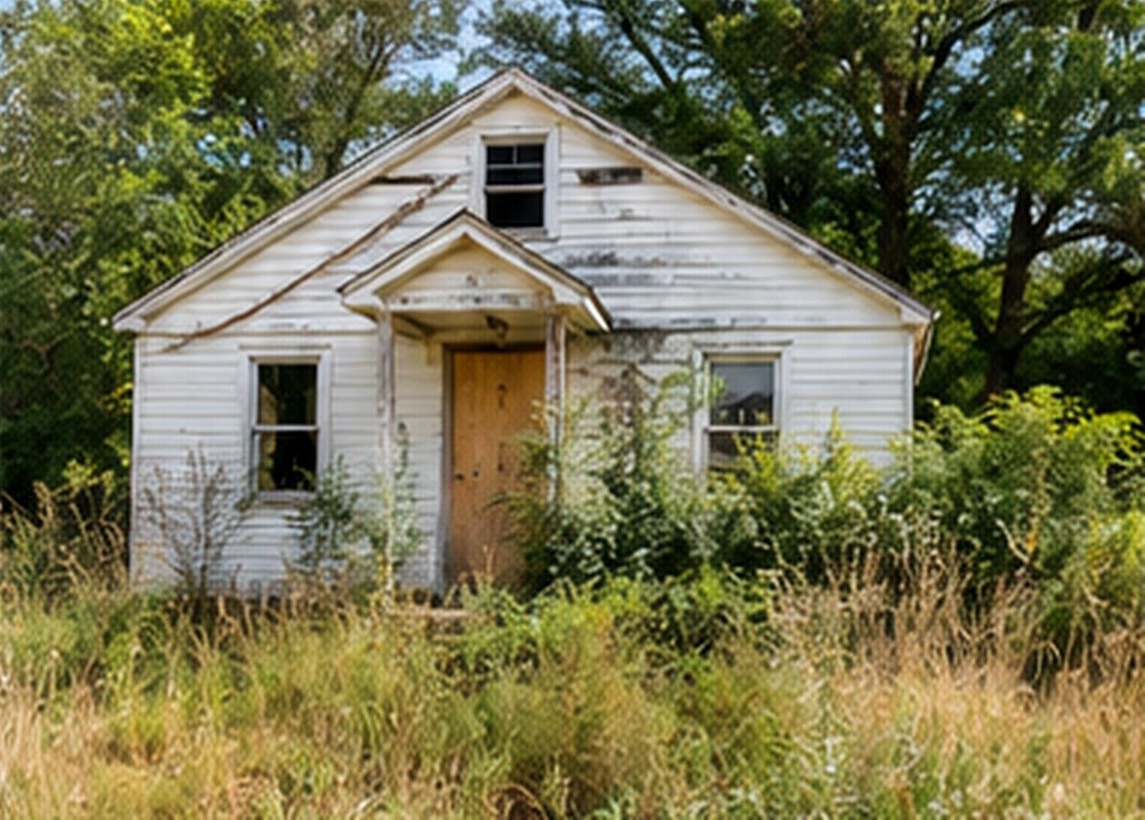
LandHat considers properties that may be vacant, overgrown, damaged, uninsured, unsafe to enter, full of belongings or debris, in need of major repairs, affected by fire, water, animals, or neglect, unfinished, or difficult to secure.
You do not need to clean, repair, mow, empty, or prepare the property before contacting LandHat.
The condition will be considered when LandHat evaluates the property and any offer.
A property may have a road used without legal documentation, recorded access that cannot be used physically, no apparent public-road access, an unclear easement, access dependent on a neighbor, or a survey or boundary problem.
Three questions may need to be answered:
Some access problems can be resolved through deeds, easements, surveys, negotiation, or court work. Others may cost more to address than the property’s value justifies.
PRACTICAL, NOT THEORETICAL
A legal or technical solution may exist without being financially practical.
LandHat considers the property’s likely value, ownership interest available, expected professional costs, time required, number of people involved, and risk that the expected result cannot be achieved.
Some properties justify extensive curative work. Others do not.
Matt will provide a direct explanation of what LandHat believes is possible.
CONTACT LANDHAT
You do not need every answer before contacting Matt.